

History is often remembered through stories written long after events happened. Yet some civilizations attempted something different: they recorded power in real time. They carved victories into stone, impressed political messages into clay tablets, and transformed royal authority into permanent written memory.
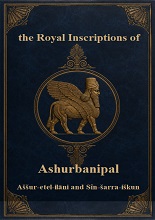
One of the most remarkable examples of this practice survives from ancient Mesopotamia and appears in the scholarly volume Royal Inscriptions of the Neo-Assyrian Period (RINAP) 5/2. This extensive work gathers, edits, translates, and studies a major collection of inscriptions connected with the reign of Ashurbanipal, one of the last great kings of the Neo-Assyrian Empire.
More than a historical archive, this volume opens a direct path into the intellectual, political, religious, and administrative world of one of antiquity’s most influential imperial states.
What Is Royal Inscriptions, Imperial Memory, and the World of Ashurbanipal
RINAP stands for Royal Inscriptions of the Neo-Assyrian Period, a long-running academic publication project dedicated to preserving and presenting the official inscriptions of Neo-Assyrian rulers in modern scholarly editions.
This volume, known as RINAP, focuses on a substantial corpus of inscriptions associated with King Ashurbanipal and forms part of a broader effort to document and interpret the surviving textual record of late Assyria.
Rather than functioning as a conventional history book, this publication serves as a critical edition. It combines historical commentary, textual reconstruction, translation work, scholarly annotations, and archival organization.
The result is a work that allows modern readers to move beyond simplified narratives of ancient history and encounter primary historical voices directly.
Who Was Ashurbanipal?
To understand why this volume matters, it helps to understand the ruler at its center.
Ashurbanipal ruled during the seventh century BCE and is remembered as one of the most powerful monarchs of the Neo-Assyrian Empire. Unlike the stereotype of ancient rulers who acted solely as military commanders, Ashurbanipal cultivated an image of intellectual authority.
His reign became associated with royal scholarship, monumental construction, military expansion, and the preservation of knowledge.
Today, Ashurbanipal is especially famous because of the royal library traditionally connected to his court at Nineveh—a collection that helped preserve major works of Mesopotamian literature for future generations.
Yet inscriptions reveal another side of his reign. They show how kings communicated legitimacy. They show how victories were framed.
They reveal how cities, temples, military campaigns, and divine authority became part of official political language.
Why Royal Inscriptions Matter More Than Many Readers Realize
Modern readers often assume inscriptions are repetitive records containing names and dates.
Ancient royal inscriptions were something more sophisticated.
They acted simultaneously as: historical record, political communication, religious declaration, public memory, ideological storytelling.
Kings did not merely record events; they shaped how those events would be remembered.
When a ruler described military campaigns, temple construction, diplomatic success, or divine approval, the text itself became an instrument of governance.
This is why works like RINAP remain valuable today. They preserve not only information but perspective.
Inside the Structure of This Volume
One of the strengths of RINAP 5/2 is its extraordinary level of organization.
The volume catalogues large numbers of clay tablets and inscriptional materials recovered primarily from ancient Nineveh and associated archaeological contexts.
Readers encounter carefully numbered texts, scholarly introductions, commentary sections, translations, and references that allow comparison across multiple fragments and historical contexts.
The editorial work behind the volume reflects decades of research and collaboration.
Rather than presenting isolated discoveries, the editors reconstruct broader textual traditions from fragmented archaeological evidence.
This process transforms broken clay pieces into historical narratives. The scale of this achievement becomes clear when moving through the hundreds of pages that document individual inscriptions and contextual analysis.
A Journey Through Ancient Assyria
Reading this work feels less like moving through a conventional academic publication and more like entering the administrative heart of an empire.
Cities emerge.
Campaigns appear.
Temples gain political significance.
Royal language reveals priorities.
The geographical references throughout the volume connect readers to major centers of Assyrian civilization and surrounding regions.
The inscriptions collectively create a map of imperial ambition.
Ancient urban spaces become visible not simply as archaeological ruins but as living centers of administration, ritual, and royal symbolism.
Through this process, the volume demonstrates that writing itself was a political technology.
The Relationship Between Writing and Power
One of the most fascinating themes readers can discover in this volume is the connection between literacy and authority.
Royal inscriptions were never neutral.
Every inscription had an audience.
Some addressed gods.
Others targeted political elites.
Some projected power across conquered territories.
Others preserved memory inside temples and palaces.
The existence of multiple inscription formats suggests that textual production formed part of governance itself.
This idea feels surprisingly modern.
Even today, institutions shape identity through documentation, archives, official communication, and public narratives.
Ancient Assyria was doing something similar more than two thousand years ago.
The Editorial Achievement Behind RINAP
A work of this scale does not emerge from simple translation.
Projects such as RINAP require years of collation, reconstruction, comparison, and scholarly review.
Fragments located across museum collections must be examined.
Readings must be verified.
Previous interpretations are reconsidered.
New joins between tablet fragments can completely alter historical understanding.
One of the impressive aspects of this publication is how it continues earlier traditions of Mesopotamian inscription studies while integrating modern scholarly methods.
Digital accessibility, improved documentation, and updated editorial standards allow the material to remain relevant for contemporary researchers.
This transforms the volume from an archive into an active research tool.
Why This Book Is Valuable Beyond Academia
At first glance, a reader might assume this is only useful for professional historians.
That would underestimate the book.
RINAP 5/2 can appeal to broader audiences interested in:
Ancient civilizations.
Archaeology.
Political history.
The history of writing.
Religion and state formation.
Imperial ideology.
Historical storytelling.
Even readers with no prior background in Assyriology can gain insight into how ancient societies organized knowledge and represented authority.
The volume rewards curiosity.
Instead of simplifying history, it allows readers to experience its complexity.
What Makes Ancient Texts Feel Surprisingly Contemporary
One unexpected discovery for many readers is how familiar some themes feel.
Questions that appear throughout ancient inscriptions still shape modern societies:
How should leaders represent success?
Who controls historical memory?
How do governments communicate legitimacy?
How does public narrative influence identity?
Although separated by millennia, these concerns remain recognizable.
That continuity gives ancient inscriptions enduring relevance.
They remind us that technology changes faster than human ambition.
Reading Experience and Accessibility
This is not a casual popular-history title.
Readers approaching the volume should expect depth, documentation, and careful scholarship.
The structure rewards selective reading.
You do not need to move page by page.
Many readers will benefit from exploring sections according to interests:
historical episodes, inscription groups, archaeological contexts, or editorial commentary.
Because of this flexibility, the volume works both as a reference source and as an immersive historical exploration.
Who Should Read This Book?
This work is especially suitable for readers who enjoy intellectually demanding material.
It may be particularly rewarding for:
students of ancient history,
researchers in archaeology,
readers interested in Mesopotamia,
collectors of historical reference works,
and anyone fascinated by how civilizations preserve memory.
For readers seeking quick summaries or narrative-driven popular history, this volume may feel dense.
But for readers willing to engage deeply, it offers exceptional rewards.
SEE Also:
Elam and Persia
Royal Correspondence of the Assyrian Empire
Guide de Suse et de Tchogha-Zanbil
Sapiens
The History of Ctesias
Download the Royal Inscriptions of Ashurbanipal, Aššur-etel-ilāni, and Sîn-šarra-iškun (PDF)
Royal Inscriptions of the Neo-Assyrian Period (RINAP) 5/2 is more than a collection of translated tablets.
It is an encounter with one of humanity’s oldest political archives.
Through inscriptions associated with Ashurbanipal and the Neo-Assyrian world, readers witness how authority was recorded, how empires described themselves, and how writing became a tool for shaping collective memory.
Long after cities collapsed and kingdoms disappeared, the words remained.
That is ultimately what makes this volume remarkable.
It demonstrates that while empires may fade, texts continue speaking.
And for readers interested in the foundations of history itself, few experiences are more compelling than listening to those voices.
In a world increasingly defined by fast information and short attention spans, this book offers something rarer: a chance to slow down and encounter history in its original language of permanence.
برای دانلود این کتاب، ابتدا باید عضو سایت بشوید.
پس از عضویت، لینک دانلود این کتاب و همهی کتابهای سایت برای شما فعال میشوند.
(قبلا عضو شدهاید؟ وارد شوید)