




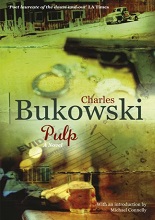
Charles Bukowski’s Pulp is one of the most unusual and fascinating novels in his career. Readers often know Bukowski for his raw realism, sharp humor, and stories about outsiders, alcohol, loneliness, and survival. But Pulp is different. It is strange, darkly funny, playful, and filled with detective-fiction energy. For anyone looking for a clear introduction to Charles Bukowski’s Pulp, this article explains what the novel is about, why it matters, and why it still attracts readers today.
If you are searching for a Charles Bukowski Pulp review, the short answer is simple: Pulp is a smart, bizarre, and entertaining final novel that mixes noir fiction, parody, and existential themes. It may not be the most typical Bukowski book, but it is one of his most memorable. Because it blends literary depth with the style of cheap detective fiction, Pulp stands out as a unique reading experience.
What Is Pulp by Charles Bukowski About?
Published in 1994, Pulp was the last novel Charles Bukowski completed. That alone makes it important. The story follows a private detective named Nick Belane, a low-level investigator in Los Angeles who takes on increasingly bizarre cases. His assignments are far from ordinary. He is hired by mysterious clients, hunts figures who may or may not exist, and finds himself caught between reality, fantasy, and death.
On the surface, Pulp looks like a classic hard-boiled detective story. There is a private eye, suspicious women, strange clients, and a city full of moral decay. But Bukowski uses these familiar elements in unusual ways. The plot becomes surreal, often absurd, and sometimes intentionally chaotic. Instead of solving mysteries in a logical way, Nick Belane moves deeper into confusion.
This is exactly what makes Bukowski’s Pulp so interesting. It is not just a detective story. It is also a parody of detective fiction and a meditation on mortality, emptiness, and literary culture.
A Brief Introduction to Charles Bukowski

Charles Bukowski was a German-born American writer known for poetry, novels, and short stories that focused on people living on the margins of society. His writing often explored work, poverty, drinking, relationships, failure, and the struggle to endure modern life. His style was direct, simple, and emotionally sharp. Over time, he became a cult literary figure with a loyal global readership.
Among the most famous Charles Bukowski books are Post Office, Factotum, Women, and Ham on Rye. These novels helped define his reputation. Yet Bukowski was more versatile than many readers assume. He could be lyrical, philosophical, comic, and absurd. Pulp proves that clearly because it shows him experimenting with genre rather than staying inside autobiography.
دانلود چند کتاب دیگر از چارلز بوکوفسکی:
عامه پسند
هزار پیشه
راهی که مردگان عشق میورزند
زنان
ناخدا برای ناهار رفته و کشتی دست ملوانان افتاده
جربزه
سوختن در آب، غرق شدن در شعله
شعرهای عاشقانه اتاقهای اجارهای
عشق، سگی است از جهنم
مرگ پدرم
Why Pulp Is Different from Other Bukowski Books
To understand why Charles Bukowski Pulp feels so unusual, it helps to compare it with his better-known novels like Post Office, Factotum, Women, and Ham on Rye. Those books are closely tied to Bukowski’s public image as the outsider writer who chronicles drinking, gambling, sex, work, boredom, and failure. They are direct, autobiographical in tone, and grounded in everyday life.
Pulp keeps Bukowski’s blunt prose and dark humor, but it abandons realism. Instead of another semi-autobiographical story, Bukowski gives readers a comic noir nightmare. This makes the novel feel lighter in style but heavier in symbolic meaning. It is less personal on the surface, yet it still carries many of the emotions that define his work: loneliness, exhaustion, frustration, and awareness of death.
Many readers see Pulp as Bukowski’s way of playing with literary expectations. He knew what readers expected from him, and instead of repeating himself, he wrote something eccentric and unpredictable. That choice is one reason why some people consider Pulp underrated. It may not be the best Charles Bukowski book for every reader, but it is one of the most distinctive.
Main Themes in Pulp
Death and mortality
One of the most important themes in Pulp is death. The novel includes Lady Death as an actual presence, which immediately signals that this is not ordinary realism. Death is not only an ending here. It becomes a character, an atmosphere, and an ongoing force. Because Pulp was Bukowski’s final novel, many readers naturally see this as part of the book’s emotional power.
The collapse of reality
Detective fiction usually depends on order. A detective investigates confusion and restores meaning. In Pulp, the opposite happens. Nick Belane tries to solve mysteries, but the world becomes stranger and less explainable. Reality itself seems unstable. This gives the novel a philosophical edge. Bukowski suggests that life may not be a puzzle that can be neatly solved.
Satire of literary culture
Another major strength of Pulp is its satire. Bukowski makes fun of literary seriousness, reputation, and the line between high culture and low culture. The novel borrows the language of cheap pulp fiction while also hinting at deeper literary concerns. This combination gives the book its special energy. It is funny, but it is also clever.
Loneliness and exhaustion
Like many Bukowski works, Pulp contains deep loneliness. Nick Belane is not a glamorous detective hero. He is tired, confused, flawed, and often powerless. Even when the novel is absurd, it carries the emotional weight of alienation. That is one reason it still feels like Bukowski, even in a different genre.
Is Pulp Easy to Read?
Yes, Pulp is easy to read in terms of language. Bukowski’s prose is clear, fast, and highly accessible. The dialogue is sharp, the chapters move quickly, and the book is relatively short. Readers who want a novel that is intellectually interesting without being stylistically difficult will likely appreciate it.
However, Pulp is not always easy to interpret. Anyone expecting a perfectly logical detective novel may feel disappointed. The story is intentionally strange and often resists straightforward explanation. The best way to read it is to accept its ambiguity and enjoy the atmosphere, humor, and symbolism.
Who Should Read Pulp?
Pulp is a great choice for readers who enjoy dark comedy, noir fiction, literary satire, and unconventional novels. It is also ideal for Bukowski fans who want to explore a different side of his writing. Readers interested in final works by major authors may also find it especially compelling.
That said, new readers should know that Pulp is not the most typical starting point if they want the classic Bukowski experience. If someone wants his most representative work, Ham on Rye or Post Office might be a better first choice. But for those open to something strange and genre-bending, Pulp is absolutely worth reading.
Strengths of Pulp
One of the biggest strengths of Charles Bukowski’s Pulp is originality. It does not feel like a routine novel. Even readers who prefer his earlier books often admit that Pulp is unlike anything else he wrote. Its combination of noir style, surreal events, and deadpan comedy gives it a memorable voice.
Another strength is its humor. The comedy in Pulp is dry, bleak, and often absurd, but it works well. Bukowski understands the clichés of detective fiction and uses them in clever ways. He keeps the tone light enough to entertain, even while exploring death and meaninglessness.
The novel also gains depth from its position in Bukowski’s career. Because it was his final completed novel, readers often approach it with a sense of closure. That makes its recurring focus on death and uncertainty feel even more powerful.
Weaknesses of Pulp
A balanced Charles Bukowski Pulp review should also mention the novel’s weaknesses. Some readers find the plot too loose and too random. If you prefer mysteries with clear structure and strong resolution, Pulp may feel frustrating. It often seems more interested in atmosphere and symbolism than in narrative payoff.
Others argue that it lacks the emotional force of Bukowski’s best autobiographical fiction. Compared with Ham on Rye or Factotum, Pulp can feel less grounded and less personal. These are fair criticisms. Still, for many readers, the very qualities that seem like flaws are what make the novel special.
Why the Title Pulp Matters
The title Pulp is more important than it first appears. Historically, “pulp” refers to cheap popular fiction printed on low-quality paper. These stories were often fast, sensational, violent, and made for entertainment. By naming the novel Pulp, Bukowski openly places it inside that tradition.
At the same time, he does not simply imitate pulp fiction. He transforms it. He uses the style of low-cost popular storytelling to ask bigger questions about death, truth, literary value, and absurdity. This gives the book an ironic edge. It is both a tribute to pulp fiction and a critique of it.
Is Pulp Worth Reading Today?
Yes, Pulp is still worth reading today. It remains relevant because it offers more than a detective story. It speaks to readers who enjoy fiction that breaks genre rules and challenges expectations. It is also a valuable novel for anyone interested in how major writers reinvent themselves late in their careers.
Modern readers may especially appreciate how Pulp plays with popular culture, identity, and uncertainty. It feels self-aware without becoming too serious. It is entertaining without being shallow. That balance is difficult to achieve, and Bukowski handles it well.
Download Charles Bukowski’s Pulp (PDF)
Pulp is not the most typical Charles Bukowski novel, but that is exactly what makes it important. It takes the framework of detective fiction and fills it with absurdity, dark humor, and a strong awareness of death. Readers expecting straightforward realism may be surprised, but those open to something experimental will find a book that is intelligent, strange, and memorable.
As a final novel, Pulp carries special weight. It shows Bukowski refusing to become predictable. Instead of repeating old formulas, he wrote a book that feels playful, bleak, and oddly philosophical at the same time. For readers exploring Bukowski novels, Pulp is well worth discovering. It may not be his most famous work, but it is one of his most intriguing and rewarding books.
برای دانلود این کتاب، ابتدا باید عضو سایت بشوید.
پس از عضویت، لینک دانلود این کتاب و همهی کتابهای سایت برای شما فعال میشوند.
(قبلا عضو شدهاید؟ وارد شوید)