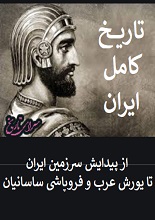

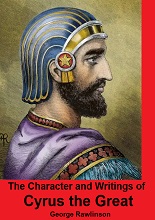
Among the legendary rulers of the ancient world, few names command as much respect as Cyrus the Great. Celebrated as the founder of the Achaemenid Persian Empire, Cyrus transformed a collection of regional kingdoms into one of history’s first truly multinational empires. His military brilliance, political wisdom, and reputation for religious tolerance have ensured that his legacy has endured for more than twenty-five centuries.
Yet one fascinating question continues to intrigue historians:
Did Cyrus the Great leave behind any written works?
For many readers, the answer seems obvious—surely a warrior who spent much of his life conquering kingdoms had little time for writing. Ancient kings are generally remembered for military campaigns rather than literary achievements. Their authority was demonstrated through victories on the battlefield, not through books, essays, or philosophical works.
Nevertheless, the historical record presents a far more interesting picture.
Although Cyrus was never regarded as a literary figure in the traditional sense, several official texts survive from his reign. These documents—including royal inscriptions carved into stone and clay as well as decrees preserved in later historical sources—provide valuable evidence of how Cyrus governed his empire and how he wished to present himself to the world.
Far from being ordinary administrative records, these writings reveal a ruler concerned with justice, legitimacy, diplomacy, and the peaceful integration of diverse peoples under Persian rule.
This is a great book of George Rawlinson.
Can Cyrus Truly Be Considered an Author?
Modern readers often associate authorship with books, poems, or philosophical treatises. In the sixth century BCE, however, royal writing served an entirely different purpose.
Kings rarely composed literary works for entertainment or education. Instead, they commissioned inscriptions that announced military victories, celebrated public works, recorded religious dedications, or proclaimed important political decisions.
These inscriptions functioned as official statements issued under royal authority.
Whether Cyrus personally dictated every sentence is ultimately less important than the fact that these texts represented his policies, beliefs, and intentions. Like modern presidential speeches drafted by advisers, ancient royal inscriptions reflected the voice and authority of the monarch even when professional scribes prepared the final wording.
For this reason, historians commonly treat such documents as authentic expressions of royal ideology.
Ancient Kings and the Tradition of Royal Inscriptions
Throughout the ancient Near East, rulers used monumental inscriptions as powerful political tools.
Egyptian pharaohs covered temple walls with accounts of military victories. Mesopotamian kings carved lengthy texts onto stone monuments describing construction projects, religious ceremonies, and successful campaigns. Assyrian rulers recorded detailed narratives of conquered cities and defeated enemies.
Writing served not merely to preserve history but also to legitimize power.
By publicly displaying these inscriptions, kings demonstrated both divine approval and political authority. Every carved line reinforced the message that the ruler governed by the will of the gods and possessed the strength necessary to maintain order.
Within this broader tradition, the inscriptions connected with Cyrus become especially significant. Unlike many earlier rulers who emphasized destruction and conquest, Cyrus frequently presented himself as a liberator, a lawful king, and a restorer of stability.
This difference would later become one of the defining features of his historical reputation.
The Historical Sources Behind the Writings of Cyrus
The surviving writings associated with Cyrus fall into two major categories.
The first consists of archaeological evidence—official inscriptions engraved on clay cylinders or stone monuments during his reign. The most famous example is the Cyrus Cylinder, discovered in Babylon during the nineteenth century. Often described as one of the world’s most important ancient artifacts, it records Cyrus’s conquest of Babylon and outlines his policies toward the city’s inhabitants and religious institutions.
Although scholars debate the extent to which the cylinder represents a declaration of human rights, there is broad agreement that it provides invaluable insight into Persian imperial ideology.
In addition to the archaeological evidence, historians also examine documents preserved within the Hebrew Bible. These include royal proclamations authorizing the Jewish exiles in Babylon to return to Jerusalem and rebuild the Temple.
Whether these texts survive as exact translations or later literary adaptations remains a matter of scholarly discussion. Nevertheless, many historians accept that they preserve the essential content of authentic royal decrees issued during Cyrus’s reign.
Together, these sources create a remarkably consistent image of a king who viewed successful government as something more than military domination.
Why These Documents Matter
The significance of these writings extends well beyond questions of authorship.
They offer a rare opportunity to examine the governing philosophy of one of antiquity’s greatest rulers through documents produced during his own lifetime or shortly thereafter.
Military victories reveal how Cyrus built an empire. His inscriptions reveal why he believed he deserved to rule it.
Rather than portraying himself simply as an unstoppable conqueror, Cyrus repeatedly emphasized restoration rather than destruction. He described himself as the legitimate ruler chosen to restore peace after periods of disorder. Local religious traditions received recognition instead of suppression, and displaced communities were often permitted to return to their ancestral homes.
This approach contrasted sharply with the policies of several earlier imperial powers, whose inscriptions frequently celebrated devastation and mass deportation.
The Challenge of Authenticity
Despite their historical importance, these documents have naturally attracted scholarly debate.
One common objection concerns authorship itself. Professional scribes almost certainly prepared the final versions of royal inscriptions. Ancient monarchs governed vast empires and relied heavily upon educated officials for administration and record keeping.
Does this mean the writings cannot be attributed to Cyrus? Most historians answer no.
Royal inscriptions were not private literary compositions. They functioned as official declarations issued with royal approval. Every statement reflected the policies the king wished to communicate, regardless of which scribe physically impressed the characters into wet clay.
The situation is remarkably similar to modern governments, where official speeches and presidential statements are often prepared by teams of advisers while still representing the views and authority of the head of state.
Consequently, the surviving writings remain among the most valuable primary sources available for understanding Cyrus’s reign.
The Cyrus Cylinder: The Most Famous Writing Attributed to Cyrus the Great
Among all surviving records connected with Cyrus the Great, none has attracted more attention than the Cyrus Cylinder. Discovered in the ruins of ancient Babylon in 1879, this small clay cylinder has become one of the most studied artifacts of the ancient Near East. Today, it serves as one of the strongest pieces of evidence for understanding how Cyrus wanted his rule to be remembered.
Written in Akkadian cuneiform shortly after the Persian conquest of Babylon in 539 BCE, the inscription presents Cyrus not as a foreign conqueror but as a legitimate ruler chosen by the chief Babylonian deity, Marduk. Rather than boasting solely about military victories, the text emphasizes restoration, peace, and political stability.
This style of royal propaganda was not unusual in Mesopotamia. Previous Babylonian and Assyrian kings had issued similar inscriptions to justify their reigns. However, Cyrus adapted this long-established tradition in a remarkably effective way. Instead of portraying himself as a destroyer, he presented himself as a liberator who restored order after years of poor government.
The cylinder explains that the previous Babylonian ruler had lost the confidence of both the gods and the people. According to the inscription, Marduk searched for a worthy king and selected Cyrus to restore justice throughout the land. This divine endorsement strengthened Cyrus’s legitimacy in the eyes of his newly conquered subjects.
Modern historians recognize that the Cyrus Cylinder was intended as political messaging rather than an objective historical account. Like many royal inscriptions of the ancient world, it highlights achievements while ignoring failures. Nevertheless, its value lies precisely in revealing how Cyrus wanted his empire to understand his rule.
Beyond Military Victory: Cyrus’s Vision of Empire
Most ancient conquerors celebrated the destruction of enemy cities and the humiliation of defeated rulers. Assyrian kings, for example, often described executions, deportations, and acts of terror in vivid detail.
The writings associated with Cyrus present a noticeably different image. Rather than focusing on fear, they repeatedly emphasize restoration.
Temples damaged during previous conflicts were repaired. Religious statues removed by earlier rulers were returned to their traditional sanctuaries. Local populations were encouraged to resume their religious practices. These actions were not necessarily driven by modern ideas of religious freedom but by practical imperial policy.
Cyrus understood that an empire containing dozens of cultures could not be governed effectively through constant oppression alone.
Respecting local traditions reduced resistance and encouraged loyalty among newly conquered peoples.
This pragmatic approach became one of the defining characteristics of the Achaemenid Empire and helped explain why Persian rule remained remarkably stable for generations after Cyrus’s death.
The Royal Decrees Preserved in Jewish Tradition
Another important group of writings attributed to Cyrus survives not on stone or clay but within the Hebrew Bible.
According to the Books of Ezra and Chronicles, Cyrus issued a royal decree allowing Jewish exiles living in Babylon to return to Jerusalem after decades of captivity. The decree also authorized the rebuilding of the Temple and encouraged the restoration of religious life in Judah.
For Jewish history, this proclamation marked the beginning of an entirely new era. Instead of remaining prisoners in exile, thousands gained permission to rebuild their homeland under Persian protection.
Historians continue to debate whether the biblical text preserves the exact wording of the original decree. Some scholars believe it represents a faithful translation of an authentic Persian document, while others argue that later editors adapted the language for theological purposes.
Even so, very few historians doubt that Cyrus adopted a policy permitting displaced communities to return home and restore their places of worship. This broader policy is consistent with evidence found in the Cyrus Cylinder and other Persian administrative records.
The agreement between these independent traditions strengthens the historical credibility of Cyrus’s reputation as an unusually tolerant ruler.
Did Cyrus Personally Write These Documents?
This question has fascinated historians for generations. Modern readers often imagine authors physically writing every word themselves. Ancient royal administration worked very differently.
Large empires depended upon highly educated scribes trained in multiple languages and writing systems. These officials prepared diplomatic correspondence, legal records, tax documents, military reports, and royal inscriptions.
It is therefore unlikely that Cyrus personally carved cuneiform characters into clay cylinders. Yet this does not diminish the historical importance of the writings. Ancient royal inscriptions functioned as official government statements. Every sentence required royal approval because it represented the public image of the king.
The relationship resembles that between modern heads of state and professional speechwriters. Although advisers draft speeches, the ideas, policies, and authority belong to the leader who delivers them.
For this reason, historians continue to describe these inscriptions as the writings of Cyrus while recognizing the important role played by royal scribes.
What These Writings Reveal About Cyrus’s Character
When the surviving inscriptions and decrees are studied together, a remarkably consistent portrait emerges.
Cyrus appears as a ruler who valued legitimacy over intimidation.
He consistently presented himself as the lawful successor rather than an occupying conqueror.
He emphasized rebuilding instead of destruction.
He respected established religious traditions instead of attempting to replace them.
He sought cooperation from conquered peoples rather than permanent resistance.
Of course, modern historians also caution against accepting every royal claim at face value. These documents were political statements intended to strengthen imperial authority. Like all official government publications, they reflect both genuine policy and carefully constructed public image.
Nevertheless, even propaganda tells historians something important.
It reveals the ideals that rulers believed would inspire confidence among their subjects.
The fact that Cyrus chose to promote justice, restoration, and religious respect—rather than terror and violence—distinguishes him from many of his predecessors and explains why his reputation remained unusually positive across multiple civilizations.
The Lasting Legacy of Cyrus’s Writings
More than twenty-five centuries after they were created, the writings associated with Cyrus the Great continue to influence historical scholarship.
They have shaped our understanding of Persian government, inspired debates about religious tolerance, and contributed to modern discussions concerning human rights and ethical leadership.
Although scholars generally agree that describing the Cyrus Cylinder as the world’s “first declaration of human rights” oversimplifies its historical context, there is little doubt that these writings portray an unusually sophisticated model of imperial governance for their time.
Rather than ruling solely through fear, Cyrus combined military strength with political flexibility, cultural respect, and administrative intelligence.
His surviving writings remind us that the greatest empires are not built by conquest alone. They endure because successful rulers understand how to unite diverse peoples under a common political vision.
For that reason, the writings of Cyrus remain among the most valuable historical sources from the ancient world. They preserve not only the official voice of the founder of the Persian Empire but also the principles that helped transform a victorious general into one of history’s most admired monarchs.
Download The Character and Writings of Cyrus the Great by George Rawlinson
برای دانلود این کتاب، ابتدا باید عضو سایت بشوید.
پس از عضویت، لینک دانلود این کتاب و همهی کتابهای سایت برای شما فعال میشوند.
(قبلا عضو شدهاید؟ وارد شوید)