

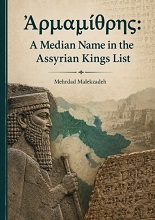
Ἁρμαμίθρης: A Median Name in the Assyrian Kings List is a scholarly study by Mehrdad Malekzadeh, an Iranian researcher in the field of archaeology and ancient Iranian studies. The article examines the historical and linguistic significance of the ancient name Ἁρμαμίθρης (Harmamithres), a name identified as originally Median but preserved in traditions concerning the kings of Assyria. The study uses the investigation of personal names as a means of approaching the poorly documented history and language of ancient Media.
The central subject of the article is an apparent historical contradiction: how could a Median personal name appear in a list presented as a list of Assyrian kings? The author approaches this question through onomastics, the study of personal and place names, and through historical linguistics. This approach is particularly important for the study of the Medes because direct written evidence in the Median language is extremely limited. Consequently, scholars must often reconstruct aspects of Median language and culture through names preserved in Greek, Babylonian, Persian, Assyrian, Armenian, Syriac, and other sources.
The name Harmamithres is especially interesting because it occurs in more than one historical tradition. Herodotus mentions Harmamithres as one of the sons of Datis, the Median commander who served the Persian Empire. In Herodotus’s account, Harmamithres and his brother Tithaeus were commanders of cavalry in the army of Xerxes. The article therefore begins with a figure whose name is firmly connected with the Median and Achaemenid world before turning to the much more complicated tradition in which the same or a related name appears among the kings of Assyria.
One of the most important linguistic questions discussed in the study concerns the second element of the name, Mithra. The author notes that the element associated with Mithra, the ancient Indo-Iranian deity, is comparatively clear. The interpretation of the first element, however, has been much more controversial. Various scholars have proposed different etymologies and meanings for the name, reflecting the difficulties involved in reconstructing ancient Iranian names through their Greek forms.
The article reviews several earlier interpretations of Harmamithres. Some scholars connected the first element with the Greek word for a war chariot and consequently attempted to interpret the name in terms of a “chariot” and Mithra. Others proposed meanings related to the “hand” or “arm” of Mithra, while still others interpreted the name as something like “young friend” or a person supported by Mithra. The author presents these interpretations not simply as isolated translations but as evidence of the methodological problems surrounding the interpretation of Iranian names transmitted through Greek sources.
A major part of the study is devoted to the Assyrian King List preserved through classical and later traditions. The author emphasizes that the list associated with Ctesias of Cnidus is fundamentally different from the genuine Assyrian king lists known from cuneiform evidence. The Ctesian tradition contains a mixture of names that are Assyrian, Babylonian, Iranian, Greek, and sometimes difficult to identify. Among these names are figures such as Xerxes, Areius, Mithraeus, and Harmamithres.
The problem becomes even more complicated because the original works containing these traditions have not survived in their entirety. Information about the alleged Assyrian kings was transmitted through later Greek, Latin, Armenian, Syriac, Byzantine, and other authors. As a result, the name Harmamithres appears in a number of different forms, including Armamithres, Amramithes, Armamithrus, Armamithros, and related forms. The variations are treated by the author as natural consequences of transmission through different languages and manuscripts rather than as evidence for entirely separate individuals.
The persistence of the name through these later historical traditions is one of the fascinating aspects of the article. Harmamithres appears in material associated with authors and chroniclers such as Eusebius, Jerome, Moses of Chorene, Byzantine chroniclers, Syriac chroniclers, and eventually in traditions known to medieval Islamic scholars. The survival of the name across such a wide range of languages illustrates how ancient historical traditions could be repeatedly copied, translated, transformed, and incorporated into new chronological systems.
The author then turns to the relationship between Herodotus and Ctesias, two of the most important Greek authors for the study of ancient Iran. Harmamithres presents a particularly interesting case because the name is clearly associated with the Herodotean tradition, yet it also occurs in material connected with the Ctesian tradition. This raises the question of how a name known from Herodotus could enter the tradition of the Assyrian kings attributed to Ctesias.
The study argues that the answer cannot simply be reduced to an accidental mistake made by a careless compiler. According to the author’s interpretation, the appearance of Iranian and particularly Median names in the Ctesian Assyrian traditions may reflect older layers of historical and legendary traditions circulating in western Iran. Ctesias served as a physician at the Achaemenid court and had access to Persian and Median traditions. He did not, however, have direct access to a living Assyrian scholarly tradition, since the Assyrian Empire had disappeared centuries earlier. The author therefore considers the possibility that the stories about Assyria transmitted by Ctesias were themselves shaped by Iranian traditions preserved in the Median and Persian cultural environment.
This interpretation is important because it changes the way the so-called Assyrian King List associated with Ctesias might be understood. Rather than treating every name in it as evidence for the actual historical succession of Assyrian monarchs, the article suggests that such lists preserve layers of historical memory, oral tradition, legendary material, and Iranian interpretations of the ancient Near East. The actual Assyrian king lists discovered through archaeological research are substantially different from the lists transmitted through the later classical tradition.
Harmamithres therefore becomes more than an obscure ancient name. It serves as a small but revealing piece of evidence for the complicated interaction between Median, Persian, Assyrian, Babylonian, Greek, and later historiographical traditions. The name demonstrates how the memory of ancient peoples could survive outside their own languages and political institutions, sometimes in contexts very different from those in which the original name was used.
The study also has broader significance for the reconstruction of Median history. Since the Median language itself is poorly documented, ancient personal names are among the few pieces of evidence through which researchers can investigate its linguistic characteristics. Names preserved in Greek and Babylonian documents can therefore provide clues about Iranian linguistic forms, phonetic developments, religious concepts, and cultural contacts. The article’s analysis of Harmamithres is consequently part of a larger effort to reconstruct aspects of Median civilization from fragmentary evidence.
Another important theme is the distinction between historical reality and historical tradition. The author stresses that the legendary accounts of Assyria and Media transmitted through Ctesias should not be treated as straightforward records of political history. Later traditions about figures such as Ninus, Semiramis, Sardanapalus, and Arbaces contain elements that appear to preserve memories of genuine ancient people and institutions, but these memories were transformed through storytelling and historical imagination. The same methodological caution must therefore be applied to Harmamithres.
Ultimately, the article proposes that the Median origin of Harmamithres is significant precisely because its presence in the Assyrian king lists is unlikely to be explained simply as a random later invention. The author suggests that the name may derive from an independent tradition associated with a historical period in which Iranian, Mesopotamian, and perhaps Anatolian names and traditions became intertwined. This period may have been the Median era or the transitional period immediately preceding the rise of the Achaemenid Empire.
Ἁρμαμίθρης: A Median Name in the Assyrian Kings List is therefore a specialized but valuable study for anyone interested in the history of the Medes, ancient Iranian languages, Persian and Median personal names, Assyrian historiography, Ctesias, Herodotus, and the transmission of ancient historical traditions. Rather than offering a conventional narrative of a king or empire, the article takes a single enigmatic name and uses it as a window into the complex process through which the history of the ancient Near East was remembered and rewritten.
The study ultimately demonstrates the importance of examining ancient names within their broader textual and historical environments. A name that appears to be a minor detail in an ancient list can preserve evidence about cultural contact, linguistic change, historical memory, and the movement of stories between civilizations. Harmamithres is a particularly striking example because its Median identity sits unexpectedly within a tradition concerning Assyria, opening a much wider discussion about how Median and Persian traditions contributed to later Greek and Near Eastern conceptions of the ancient past.
معرفی مقاله هَرمامیثرِس: یک نام مادی در فهرست پادشاهان آشور
مقاله «هَرمامیثرِس: یک نام مادی در فهرست پادشاهان آشور» پژوهشی از مهرداد ملکزاده در حوزه ایرانشناسی، نامشناسی تاریخی و تاریخ روایی ایران باستان است. موضوع اصلی مقاله، بررسی نام باستانی «هَرمامیثرِس» و چرایی حضور آن در فهرستهایی است که در سنت تاریخی متأخر به عنوان فهرست پادشاهان آشور شناخته شدهاند. نویسنده با استفاده از شواهد زبانشناختی و تاریخی میکوشد ریشه این نام و جایگاه آن را در سنتهای تاریخی مربوط به ماد و آشور بررسی کند.
اهمیت این پژوهش از آنجا ناشی میشود که هَرمامیثرِس نامی ایرانی و بهطور مشخص مادی دانسته شده، اما در فهرستی قرار گرفته که ظاهراً باید مربوط به پادشاهان آشور باشد. نویسنده با بررسی منابع یونانی، بابلی، ارمنی، سریانی و دیگر منابع تاریخی نشان میدهد که این نام در طول قرنها با صورتهای گوناگون منتقل شده و بخشی از یک سنت پیچیده تاریخی درباره ماد، آشور و ایران باستان بوده است.
یکی از مباحث مهم مقاله، بررسی ارتباط هَرمامیثرِس با نام مهر یا میثره است. نویسنده دیدگاههای پژوهشگران مختلف درباره ریشه و معنای این نام را بررسی میکند و نشان میدهد که تفسیر نامهای ایرانی باستان، هنگامی که از طریق خط و زبان یونانی و سپس زبانهای دیگر منتقل شدهاند، با دشواریهای فراوانی روبهرو است.
در ادامه، مقاله به حضور هَرمامیثرِس در آثار هرودوت و سپس در سنت منسوب به کتسیاس میپردازد. در روایت هرودوت، هَرمامیثرِس یکی از پسران داتیس و از فرماندهان سوارهنظام در سپاه هخامنشی است. از سوی دیگر، همین نام در فهرستهای متأخر پادشاهان آشور نیز دیده میشود. همین مسئله پرسش اصلی پژوهش را شکل میدهد: چگونه نامی مادی که در سنت هرودوت شناخته شده است، وارد سنت مربوط به پادشاهان آشور شده است؟
نویسنده در پاسخ، به نقش سنتهای روایی ایرانی و بهویژه سنتهای مادی و پارسی توجه میکند. از نگاه او، فهرستهای منسوب به کتسیاس را نمیتوان با فهرستهای واقعی و تاریخی پادشاهان آشور یکسان دانست. این فهرستها حاصل انتقال مجموعهای از روایتها، نامها و خاطرات تاریخی در طول زمان هستند و احتمالاً بخشی از آنها از سنتهای ایرانیِ موجود در دوران ماد و هخامنشی سرچشمه گرفتهاند.
در نهایت، هَرمامیثرِس در این مقاله تنها یک نام باستانی نیست؛ بلکه بهانهای برای بررسی چگونگی شکلگیری و انتقال روایتهای تاریخی درباره ماد و آشور است. پژوهش نشان میدهد که برای شناخت تاریخ ماد، که اسناد مستقیم درباره زبان و فرهنگ آن محدود است، مطالعه نامهای خاص و بررسی تطبیقی آنها با منابع گوناگون اهمیت فراوانی دارد. این مقاله از همین منظر میتواند برای علاقهمندان به تاریخ ماد، ایران باستان، آشور، زبانهای ایرانی و تاریخنگاری یونانی جذاب و قابل توجه باشد.
برای دانلود این کتاب، ابتدا باید عضو سایت بشوید.
پس از عضویت، لینک دانلود این کتاب و همهی کتابهای سایت برای شما فعال میشوند.
(قبلا عضو شدهاید؟ وارد شوید)