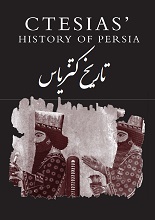
The History of Ctesias is one of the most fascinating and debated works of ancient historiography. Written by Ctesias of Cnidus, a Greek physician who lived in the fifth and early fourth centuries BCE, this work offers a rare perspective on the Persian Empire from someone who actually served within the Achaemenid royal court.
Although the original text has not survived in complete form, significant fragments have been preserved through later classical writers such as Photius, Diodorus Siculus, Plutarch, and others. Through these sources, scholars have reconstructed much of Ctesias’ historical narrative, especially his major works Persica and Indica.
For readers interested in ancient Persian history, Greek historiography, and the political culture of the Achaemenid Empire, Download The History of Ctesias PDF remains an essential subject of study.
Who Was Ctesias of Cnidus?
Ctesias was born in Cnidus, a Greek city in Asia Minor. He later entered the service of the Persian king Artaxerxes II Mnemon, who ruled from 404 to 358 BCE. As a royal physician, Ctesias had direct access to the Persian court and claimed to have consulted official royal archives.
This privileged position shaped his historical writing. Unlike Herodotus, who traveled extensively and relied on oral accounts, Ctesias presented himself as an insider to Persian political life. He believed his proximity to power gave him superior authority over other historians.
His most important works include:
- Persica (a history of Assyria, Media, and Persia in 23 books)
- Indica (a descriptive account of India and its marvels)
Together, these texts are commonly referred to as The History of Ctesias.
Ctesias’ ‘History of Persia’: Tales of the Orient
Persica was Ctesias’ most ambitious project. Originally composed in 23 books, it aimed to provide a comprehensive history of Eastern empires from ancient Assyria to Ctesias’ own lifetime.
The work can be divided into three major historical phases:
The Assyrian Empire
Ctesias begins with legendary Assyrian rulers such as Ninus and Semiramis. These narratives blend myth, legend, and historical memory. The dramatic storytelling reflects ancient Greek fascination with powerful Eastern monarchies.
The Median Empire
Following the Assyrians, Ctesias describes the rise of the Medes. This section provides an alternative genealogy and chronology compared to Herodotus.
The Persian Empire
The majority of Persica focuses on the Achaemenid dynasty. Ctesias recounts the reigns of:
- Cyrus the Great
- Cambyses
- Darius I
- Xerxes I
- Artaxerxes I
- Darius II
- Artaxerxes II
The later books, especially those dealing with Artaxerxes II, are considered particularly valuable because Ctesias personally witnessed some of these events.
Court Intrigue and Political Drama
One of the most distinctive features of Persica is its attention to palace politics. Ctesias provides detailed accounts of:
- Royal marriages
- Court conspiracies
- Succession struggles
- The influence of queens and royal women
- Assassinations and rebellions
His description of the rebellion of Cyrus the Younger is especially important, as it intersects with Xenophon’s Anabasis.
Ctesias and Herodotus: A Historical Debate
The History of Ctesias is often discussed in comparison with Herodotus’ Histories. Ctesias openly criticized Herodotus, accusing him of inaccuracies and exaggerations.
Key Differences Between Ctesias and Herodotus:
Source Material
Ctesias claimed to rely on Persian royal archives, while Herodotus relied largely on interviews and travel accounts.
Portrayal of Persia
Herodotus often emphasized the contrast between Greeks and Persians. Ctesias, by contrast, offered a more court-centered and sometimes more sympathetic portrayal of Persian rulers.
Narrative Style
Herodotus’ style blends ethnography and storytelling. Ctesias tends toward dramatic court narratives filled with intrigue.
Modern historians do not fully trust either source in isolation. Instead, they compare both accounts to develop a more balanced reconstruction of Achaemenid history.
The Indica: India in Ancient Greek Imagination
In addition to Persica, Ctesias wrote Indica, a separate work dedicated to describing India. This text had a significant influence on how the Greek world imagined the distant East.
Themes of Indica:
Exotic Geography
Ctesias described India as a land of extraordinary landscapes and natural abundance.
Marvelous Creatures
Indica includes references to unusual animals and mythical beings. While modern readers may view these descriptions as fantastical, they reflect ancient curiosity about unknown territories.
Cultural Observations
The work also includes commentary on Indian customs, wealth, and political organization.
Although Indica contains exaggerated elements, it represents one of the earliest Greek attempts to systematically describe India.
Reliability and Controversy
From antiquity onward, Ctesias’ credibility has been debated. Some ancient critics accused him of inventing stories. Others valued his unique perspective.
Strengths of Ctesias:
- Access to Persian court traditions
- Detailed political narratives
- Alternative perspective to Greek-centered accounts
Weaknesses of Ctesias:
- Chronological inconsistencies
- Dramatic embellishment
- Possible court bias
Modern scholarship treats Ctesias as a complex and layered source rather than simply dismissing him.
Historical Importance of The History of Ctesias
Despite its fragmentary survival, The History of Ctesias remains historically significant for several reasons.
Alternative Source on Achaemenid Persia
Ctesias provides information not found in Herodotus or Xenophon.
Insight into Persian Court Culture
His accounts illuminate the political dynamics of the Achaemenid royal family.
Influence on Later Writers
Later historians relied on Ctesias’ narratives, even when they disagreed with him.
Contribution to Universal History
By beginning with Assyria and moving through successive empires, Ctesias contributed to the development of large-scale historical synthesis.
Themes Explored in The History of Ctesias
Several recurring themes shape the narrative structure of Ctesias’ historical writing.
Power and Legitimacy
Questions of rightful succession dominate the Persian narrative.
Women in Politics
Queens and royal mothers play influential roles in palace affairs.
Empire and Identity
Ctesias explores how empires rise, expand, and eventually decline.
Memory and Myth
The blending of legend and recorded history reflects the ancient understanding of the past.
Modern Reassessment of Ctesias
In recent decades, scholars have reevaluated Ctesias more carefully. Rather than dismissing him as unreliable, they analyze his work within its literary and political context.
Ctesias represents a different historiographical tradition—one shaped by court service, cross-cultural experience, and imperial perspective.
His narrative challenges us to consider:
- How history is constructed
- How political proximity influences storytelling
- How competing narratives shape collective memory
Historical Context: The World in Which Ctesias Wrote
To understand The History of Ctesias, it is essential to examine the historical and political environment in which it was composed. Ctesias lived during a period of intense interaction between the Greek city-states and the Persian Empire. The Greco-Persian Wars had already reshaped the Mediterranean political landscape, and tensions between Athens, Sparta, and Persia continued throughout the late fifth century BCE.
After the Peloponnesian War (431–404 BCE), Persia became deeply involved in Greek affairs. Artaxerxes II, whom Ctesias served, played a crucial role in financing and influencing Greek political conflicts. This was not a distant empire observing Greece from afar; it was an active geopolitical power shaping Greek destiny.
Ctesias wrote at a time when:
- Greek intellectual life was flourishing
- Political alliances were unstable
- Persian influence in the Aegean was significant
- Competing historical narratives were emerging
His position inside the Persian court during this era gave him a rare dual perspective: he was culturally Greek but professionally embedded in the Persian imperial system.
This dual identity profoundly shaped The History of Ctesias.
The Narrative Style of Ctesias
One of the most distinctive aspects of Ctesias’ historical writing is his narrative style. Unlike Thucydides, who pursued analytical rigor, or Herodotus, who blended ethnography with storytelling, Ctesias leaned heavily toward dramatic court narrative.
His writing style can be characterized by:
- Emphasis on personal rivalries
- Detailed descriptions of royal personalities
- Suspenseful political conspiracies
- Emotional storytelling
Many episodes read almost like historical drama. Royal courts are portrayed as spaces of intrigue, betrayal, ambition, and manipulation. Queens, eunuchs, generals, and advisors all play significant roles in shaping political outcomes.
This theatrical dimension has led some scholars to question his reliability. However, others argue that such dramatic details may reflect genuine court traditions preserved through oral storytelling.
Women and Power in Persica
A particularly fascinating feature of The History of Ctesias is its attention to royal women. Compared to other Greek historians, Ctesias gives remarkable prominence to queens and royal mothers.
Figures such as:
- Semiramis
- Parysatis
- Amestris
are portrayed as politically influential actors rather than passive figures.
Parysatis, the mother of Artaxerxes II and Cyrus the Younger, plays an especially central role in the later books of Persica. Ctesias describes her as intelligent, strategic, and deeply involved in succession politics.
Through these portrayals, Ctesias provides one of the earliest surviving literary explorations of female political agency within an imperial court.
This emphasis distinguishes his work from many Greek sources that marginalized or simplified the role of women in governance.
The Rebellion of Cyrus the Younger
One of the most historically significant events described in The History of Ctesias is the rebellion of Cyrus the Younger against his brother Artaxerxes II.
Cyrus attempted to seize the Persian throne in 401 BCE, leading to the famous Battle of Cunaxa. Although Cyrus was killed, the event had major consequences for both Persian and Greek history.
Ctesias was reportedly present during this campaign and even treated Artaxerxes II after the battle. His account therefore offers a rare insider perspective on:
- The political motivations behind the rebellion
- The structure of the Persian military
- The internal divisions within the royal family
- The aftermath of the failed coup
When compared with Xenophon’s Anabasis, which narrates the experience of Greek mercenaries in Cyrus’ army, Ctesias provides a complementary imperial viewpoint.
Together, these sources allow modern historians to reconstruct one of the most dramatic episodes of late Achaemenid history.
Ctesias and the Construction of Imperial Memory
The History of Ctesias is not merely a chronicle of events. It is also a reflection of how empires construct and preserve memory.
By beginning with Assyria and tracing a long succession of Eastern empires, Ctesias situates Persia within a grand historical continuum. This narrative strategy serves several purposes:
- It legitimizes Persian rule as part of a larger imperial tradition
- It emphasizes continuity rather than rupture
- It frames Persian authority as historically inevitable
This approach resembles later universal histories that seek to explain the rise and fall of civilizations as part of a broader pattern.
In this sense, Ctesias contributes to the intellectual evolution of historiography. He moves beyond isolated events and toward a more integrated narrative of empire.
Myth, Legend, and Historical Memory
Modern readers often struggle with the legendary elements in Ctesias’ work. Stories of extraordinary rulers, exaggerated wealth, and marvelous events appear throughout his narrative.
However, rather than dismissing these passages outright, scholars analyze them as part of ancient historiographical method.
In antiquity:
- Myth and history were not strictly separated
- Oral traditions shaped written narratives
- Symbolic storytelling conveyed political truth
The stories of Semiramis, for example, may combine folklore with political memory. By examining these accounts critically, historians gain insight into how ancient societies understood power and kingship.
Ctesias therefore becomes not only a source of historical data but also a witness to the ancient imagination.
Transmission and Survival of the Text
One of the great tragedies of classical literature is that The History of Ctesias survives only in fragments. Download The History of Ctesias PDF.
The original manuscripts were lost, but later writers preserved portions of the text. The most important source is Photius, a ninth-century Byzantine scholar who summarized Persica and Indica in his Bibliotheca.
Other fragments appear in:
- Diodorus Siculus
- Plutarch
- Athenaeus
- Nicolaus of Damascus
Because we rely on secondary transmission, reconstructing Ctesias’ original intent requires careful philological analysis.
Modern editions collect these fragments and attempt to restore the structure of the original 23 books. Although incomplete, the surviving material is substantial enough to reveal the scope and ambition of his project.
Modern Scholarly Reassessment
For many centuries, Ctesias was dismissed as unreliable. Nineteenth-century historians often contrasted him unfavorably with Herodotus and Thucydides.
However, twentieth- and twenty-first-century scholarship has adopted a more nuanced approach.
Recent reassessments emphasize:
- The possibility that Ctesias preserved authentic Persian court traditions
- The importance of analyzing his narrative within its literary context
- The value of alternative perspectives in reconstructing ancient history
Rather than viewing him simply as inaccurate, scholars now consider how his work reflects cross-cultural exchange between Greece and Persia.
His text becomes evidence not only of Persian history but also of Greek engagement with imperial power.
Download The History of Ctesias PDF
The History of Ctesias remains a compelling window into the ancient world. Even in fragmentary form, it offers valuable insights into the Achaemenid Empire, Greek-Persian relations, and the evolution of historical writing.
For modern readers, this work is more than an ancient chronicle. It is a reminder that history is shaped by perspective, access, and intention. Ctesias’ voice—sometimes dramatic, sometimes controversial—adds depth to our understanding of one of the greatest empires of antiquity.
The History of Ctesias invites readers to explore the intersections of myth and memory, power and narrative, and Greece and Persia in the classical age.
برای دانلود این کتاب، ابتدا باید عضو سایت بشوید.
پس از عضویت، لینک دانلود این کتاب و همهی کتابهای سایت برای شما فعال میشوند.
(قبلا عضو شدهاید؟ وارد شوید)